
Sensory-Friendly Clothing: How I Dress My Neurodivergent Body (and Mind)
I'm going to be really honest with you here.
For most of my life I thought I was just picky about clothes. I'd get dressed, feel fine for ten minutes, and then spend the rest of the day tugging, adjusting, scratching and overheating. I couldn't figure out why one outfit made me feel calm and another made me want to crawl out of my skin by noon.
Then I got my autism diagnosis, later in life and right alongside my son's. Suddenly so much made sense. It wasn't me being picky. It was my nervous system telling me what it needed.
So when I talk about sensory-friendly clothing, I'm not talking about a trend. I'm talking about how I get through the day as a neurodivergent mom who still wants to look and feel like herself.
What "sensory friendly" actually means to me
Sensory friendly covers a lot of ground. These are the five things I check before anything makes it into my closet or into the shop.
1. It has to feel soft.
Soft, flexible fabric is the obvious one, and it matters. If it feels stiff or rough on my hand in the store, it's going to feel ten times worse on my body by 3 PM.
2. Zero itch. Not "a little." Zero.
Scratchy knits, tags, rough seams, stiff lace in the wrong spot. If it itches, I'll think about it all day, and I don't have room in my brain for that.
3. No fidgeting allowed.
I hate anything I have to adjust all day. Straps that slip. Necklines that shift. And the big one for me: pants that fall off my butt.
I'll be real, this has been a battle my whole life. Low-rise stretch denim was clearly not designed for a girl with muscular legs. They fit at the thigh, gap at the waist, and slide down every time I sit, bend or pick something up. Constantly hiking up your pants isn't just annoying. For a sensory brain it's a steady drip of stress that never shuts off. Now I look for rises and fits that stay put, so I can forget I'm wearing them.
4. Freedom, not constriction.
I choose fit and feel so I'm never squeezed. I want to move, breathe, sit cross-legged on the floor with my kid and not feel trapped. Relaxed fits, wide legs, boxy tees and oversized cardigans are my best friends.
5. Layers, always.
My nervous system makes it hard for my body to regulate its own temperature. I can go from freezing to overheated in the same room. So I build outfits in layers: a soft tee, a cardigan or jacket I can take off, and something I can throw back on. Layers let me adjust for my body instead of just suffering through it.
The emotional side of getting dressed
This is the part nobody talks about.
For a neurodivergent mind, an outfit isn't only about how it feels on your skin. It's about how it makes you feel inside. Getting dressed can either add to the noise in your head or quiet it down. For me, having a formula is what quiets it.
I don't do messy. I don't throw on random pieces and hope for the best. When I dopamine dress, there's a process, and the process itself is calming.
My dopamine dressing formula
1. Find the piece that's summoning me.
I open my closet and look for the statement piece that's calling my name that day. Sometimes it's a loud cardigan, sometimes it's a print, sometimes it's a skirt I've been dying to wear. I don't overthink it. My mood usually already knows, and that piece is the starting point for everything.
2. Build the outfit around it to fit the vibe.
Once I have my statement piece, everything else is there to support it. I ask myself what vibe I'm going for, then build around it with proportions and outfit formulas that already work:
Big top + fitted bottom
Small top + big bottom
Hard + soft (think a leather piece with a fuzzy knit)
Monochrome, head to toe in one color
Mixed textures in the same color family
Oversized + oversized
If something looks off, I don't start over. I keep the idea and swap the shape. Same white tee and jeans, just a boxy tee instead of a fitted one. And because every piece has to pass my five sensory checks, the outfit feels as good as it looks.
3. The mirror moment.
This is my favorite part. I step back, look in the mirror at what I just created, and there it is: my art. That's when the dopamine rush hits. It's not about being perfect. It's that feeling of "yes, this is me today," and it carries me through the whole day.
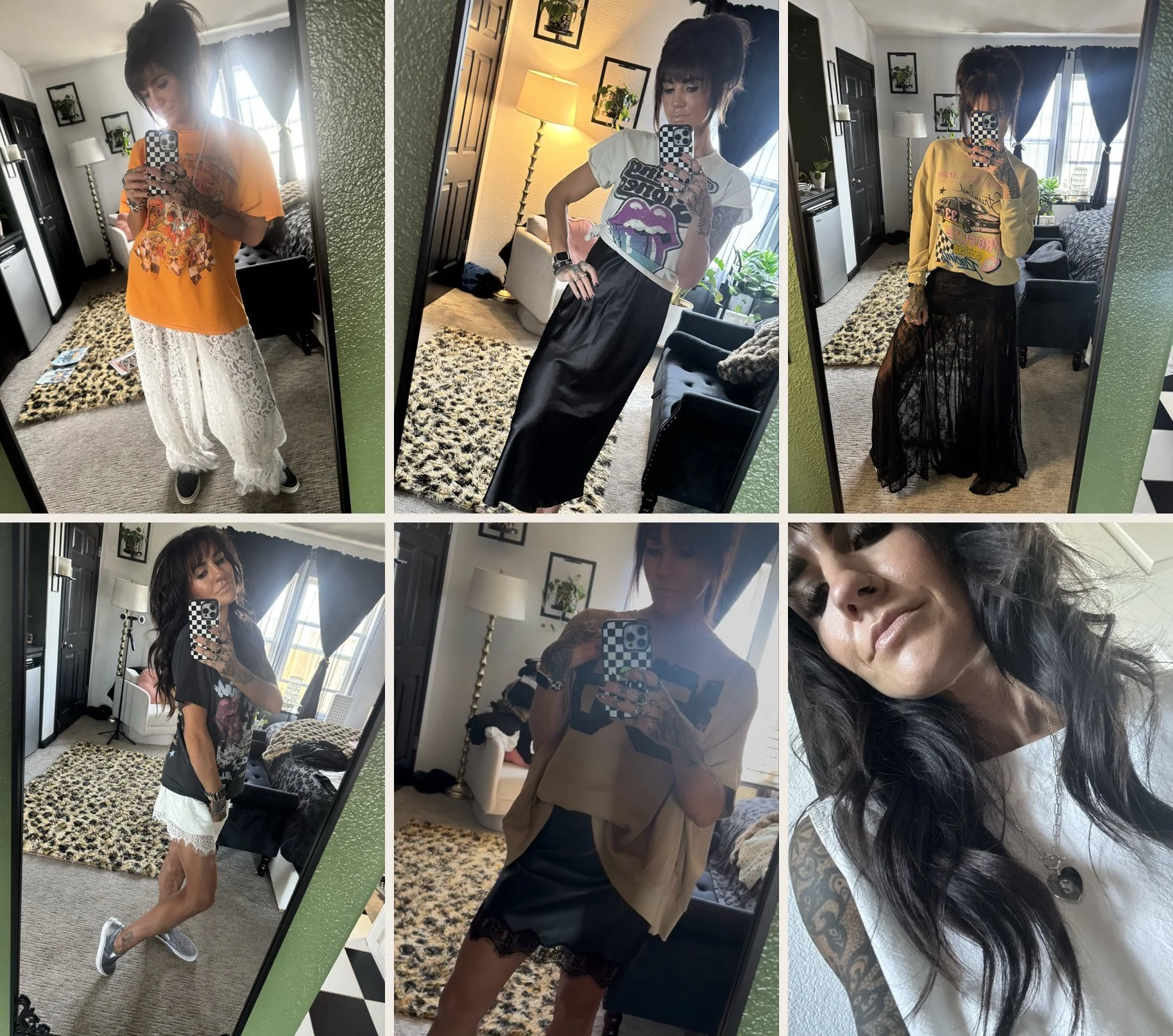
On my lowest-energy days, I still use the formula, just simplified. I pick my statement piece and pair it with one of my "safe" combos my body already loves: a soft tee and wide-leg pant, or a matching set. Same process, fewer decisions, same rush.
A few more things that help
Check whether it's the feel or the look.
If something is bugging me during the day, I take one breath and figure out which it is. Tight, itchy or slipping is a sensory problem, so I fix the feel first. If I just don't love the look, I go back to my statement piece and adjust what's around it.
Decide the night before when you can.
Decision fatigue is real, especially for ADHD and autistic brains. If I know tomorrow is a big day, I lay out my outfit the night before. Morning me is always grateful.
Give yourself permission to change.
If something stops working halfway through the day, you're allowed to take it off, swap it or add a layer. Your comfort isn't something you have to earn.
Pieces I'm reaching for right now
These are from the new Dopamine Edit. I picked them for the mood and the feel:
Oversized Alien Cardigan: an easy layer I can take on and off all day.
Melted Mix Checker Cardigan: oversized, cozy and loud in the best way.
Lucky 13 Boxy Crop Tee: a boxy fit that doesn't cling.
Satin Midi Slip Skirt: smooth against the skin and easy to move in.
Ribbed Checkered Top and Straight Leg Pants Set: one decision, whole outfit.
You're not picky. You're paying attention.
If you've ever felt like the "difficult" one about clothes, I want you to hear this: you're not difficult. Your body is giving you information. Sensory-friendly style is just listening to it, and you can still have fun, take risks and look amazing while you do.
The right outfit really does change everything. For some of us, it's the difference between a day we survive and a day we actually enjoy.
So tell me: what's your biggest sensory deal-breaker? Mine's pants that won't stay up. I'd love to hear yours.
— Cari Mac, the Cool-it Girl